How to Light Your Art
Here are some simple lighting tips to bring out the color, depth and detail in your fine art prints for maximum impact.Why Proper Lighting Makes a Difference
So you’ve found the perfect piece for your home or office and picked out the ideal spot on the wall. Everything is looking good, but there’s just one more step that can enhance the way your artwork looks. That is proper lighting.
While I print on materials that will look good in most any lighting, if you want to really get the best out of your artwork, putting some great lighting on your piece will take it to the next level! Good lighting brings out the depth, color and detail in a fine art print. It adds dimension, creates mood and helps the piece become a true focal point in the room. Poor lighting on the other hand can make even the most beautiful artwork look flat, dull or washed out.
Below are a few simple guidelines to help your art look its best.
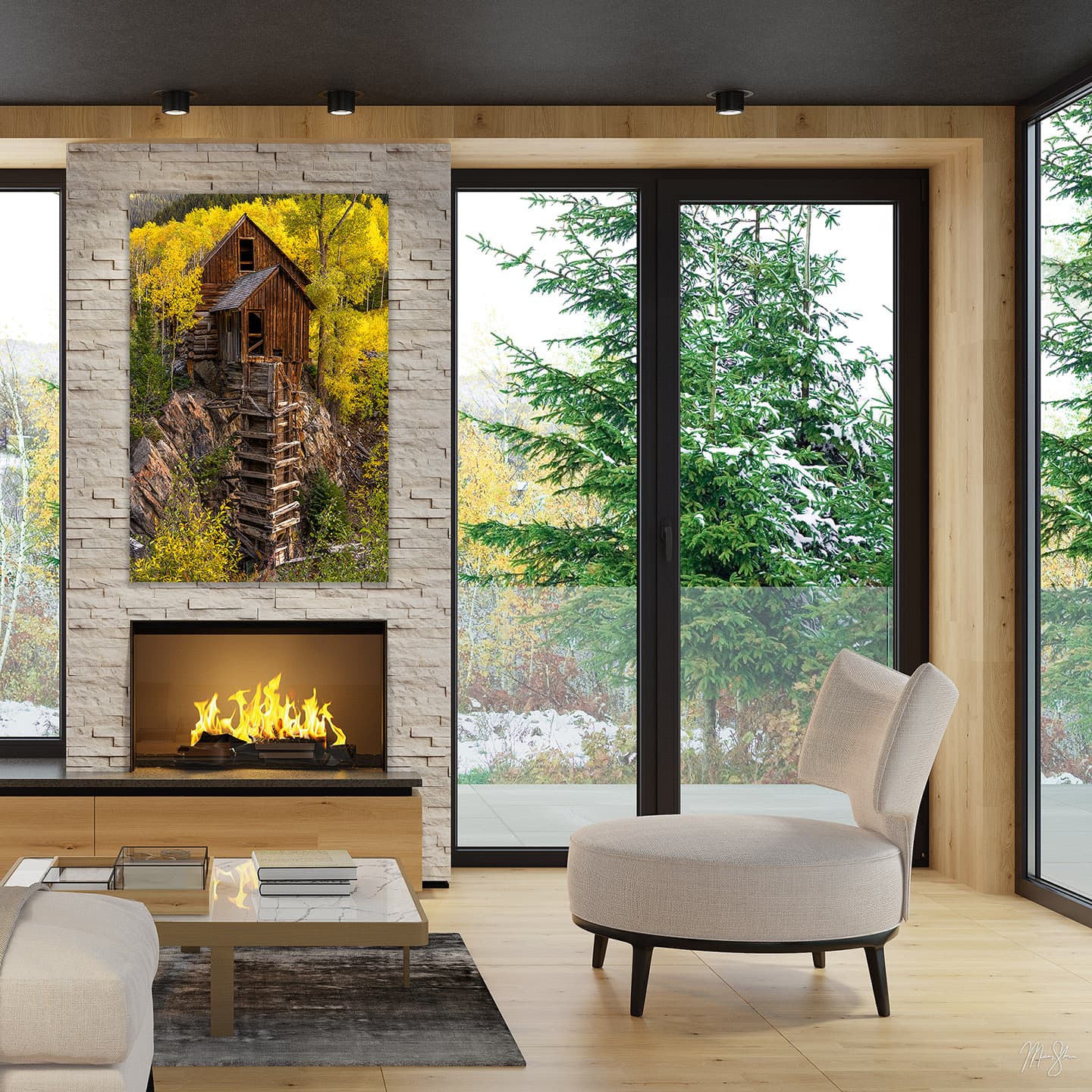
A good example of using a combination of nice natural light, along with ceiling-mounted directional spotlights to light this fine art acrylic float mount print of Historic Crystal Mill from Colorado in a mountain home.
Why Lighting Matters
Many fine art prints, especially when face-mounted with acrylic or printed on glossy metal surfaces, have high quality reflective and light-reactive surfaces. When they are lit correctly, the vibrancy is enhanced while appearing more dimensional. Many often remark that they appear backlit even.
Proper lighting doesn’t just make the artwork brighter. It can reveal more of the subtle tones, texture and contrast that aren't as noticable under poor quality lighting.
How Not to Light Your Art
Before choosing a light, here are a few considerations regarding your artwor.
Avoid prolonged direct sunlight
Modern fine art prints are created to last for decades in typical home lighting. these archival materials are designed for longevity. However, for the longest possible lifespan, it’s best to avoid placing artwork in areas that receive strong, direct sunlight for extended periods each day. Bright rooms with indirect natural light are perfectly fine and often help artwork look even more vibrant. If you do need to place artwork directly in prolonged sunlight, there are a few options to consider, but for most artwork, avoiding long-term daily prolonged sunlight is important.
Avoid harsh overhead lighting
Lights placed directly above the artwork can create glare, hot spots and possibly uneven illumination.
Avoid low-quality bulbs
Cheap bulbs often produce inaccurate colors, making artwork appear too yellow, too blue or washed out.
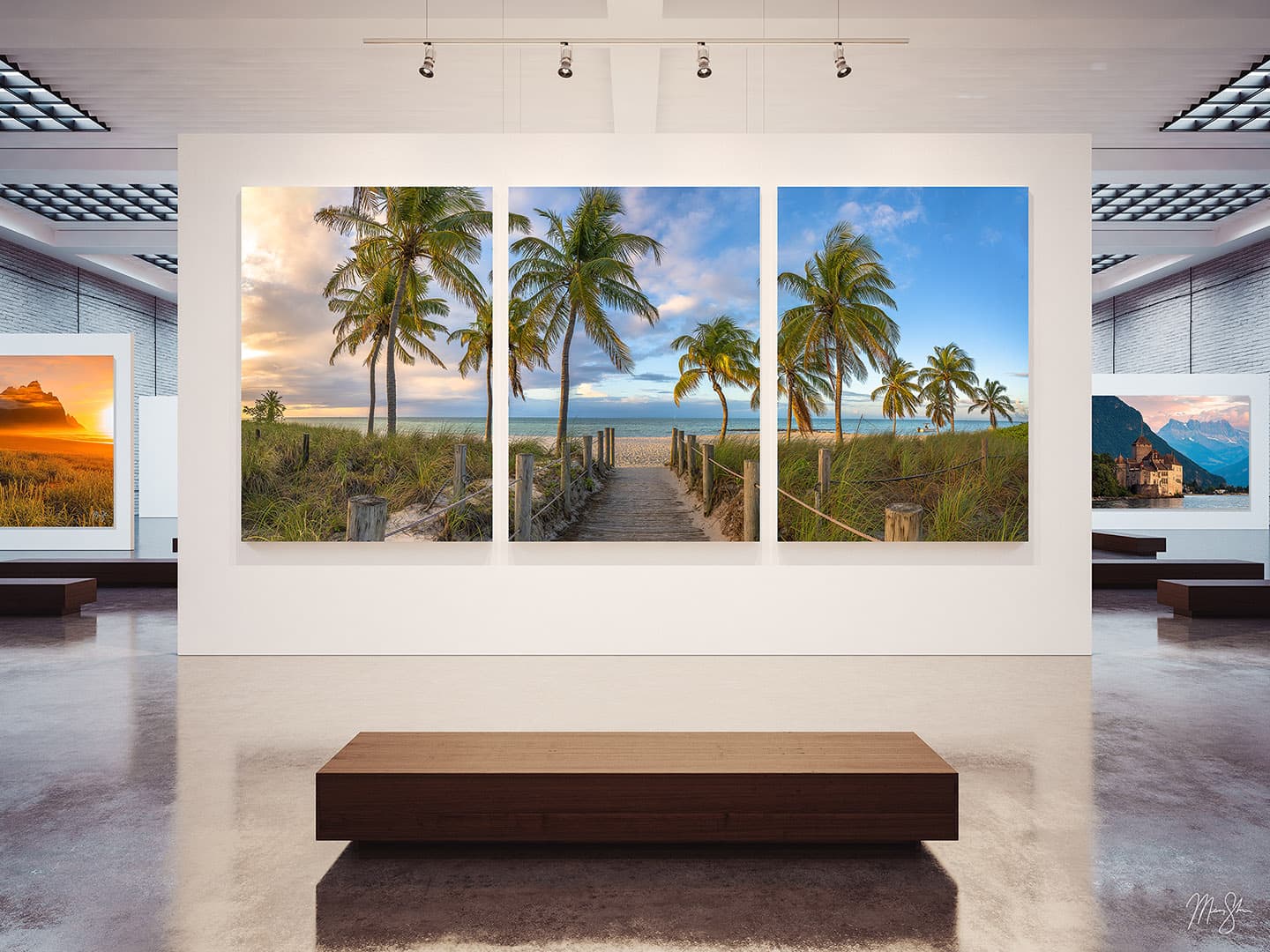
A triptych of Key West Sunrise under high end gallery lighting.
The Ideal Light for Fine Art
For most homes, a high-quality LED bulb or dedicated art light is going to be the best choice. LEDs are energy-efficient. They run cool and can be selected for accurate color rendering. When choosing a light, focus on these three key factors.
Color Temperature
Color temperature is measured in Kelvin (K) and affects how warm or cool the light appears. Below is a simple guideline to kelvin color temperature and how it will render your artwork.
- Below 2700K: Very warm, yellow light
- 2700K–3000K: Warm, gallery-like light
- 3000K–3500K: Neutral, natural light
- Above 4000K: Cool, bluish light
What is the ideal color temperature range for most artwork?
Keeping your color temperature between 2700K to 3500K will allow even and natural light on your artwork. This range keeps colors looking natural while still feeling warm and inviting in a home environment.Color Rendering Index (CRI)
CRI measures how accurately a light reveals color compared to natural daylight.
- 80 CRI: Acceptable for general lighting
- 90+ CRI: Good for artwork
- 95+ CRI: Excellent, museum-quality lighting
For fine art, choose a bulb or fixture with a CRI of at least 90.
What CRI should I look for in an art light?
Choose a light with a CRI (Color Rendering Index) of 90 or higher. Higher CRI values reveal colors more accurately and help artwork look closer to how it would appear in natural light.Brightness and Beam Spread
Brightness is measured in lumens. Your beam spread determines how wide the light covers. Here are some general guidelines for different sized artwork:
- Small pieces (under 24 inches): Narrow beam (15–25°)
- Medium pieces (24–48 inches): Medium beam (25–40°)
- Large pieces (48 inches or more): Wide beam (40–60°)
The goal is even coverage across the entire artwork without bright spots in the center. The larger the piece is, the wider the beam is needed to create even light across the artwork.
How far should a light be from the artwork?
Most artwork looks best when the light hits it at about a 30-degree angle. Ceiling lights are typically placed 2–3 feet in front of the wall to achieve even coverage without glare.Proper Light Placement
Where you place the light matters just as much as the bulb itself. A good best practice is to aim the light at the artwork from about a 30-degree angle. This angle will help reduce glare and reflections. It will also create even illuminations and add a sense of depth and dimension. As a rule of thumb, ceiling-mounted lights are usually placed about 2–3 feet in front of the wall to achieve the correct angle.
Should You Use Dimmers?
If possible, yes, a dimmer is great to have! It allows you to adjust the brightness for different times of the day. It also can help reduce glare on reflective surfaces and match the artwork lighting to the room's mood. While a dimmer isn't required for properly lighting artwork, it certainly helps to giv eyou more control over the lighting and environment.
Dimmers are especially helpful for acrylic or metal prints, which can appear brighter under strong lighting.
Tips for Reducing Glare
If your artwork will be displayed in a bright room, the type of print surface can make a noticeable difference in how it looks on the wall.
Many collectors with harsh lighting or heavy reflections in places where they will place their artwork will choose to upgrade their HD acrylic print to TruLife acrylic. TruLife acrylic is designed to reduce glare and reflections. Unlike standard glossy surfaces, TruLife acrylic uses an anti-reflective coating that will help minimize distracting reflections and glare from windows, lamps and overhead lighting. This allows you to see the deeper contrast and rich colors while enjoying the artwork from any angle, keeping the piece as the visual focal point of the room.
In spaces with lots of natural light or open floor plans, this can make a significant difference in how the artwork feels in the space. TruLife acrylic also filters out a very high percentage of UV light and is used in many museums and galleries, making it a strong choice for collectors who want both visual impact and long-term protection.
Of course, even with these benefits, it’s still best practice to avoid placing any artwork in areas that receive strong, direct sunlight for extended periods each day. Bright, naturally lit rooms without harsh direct sun are ideal.
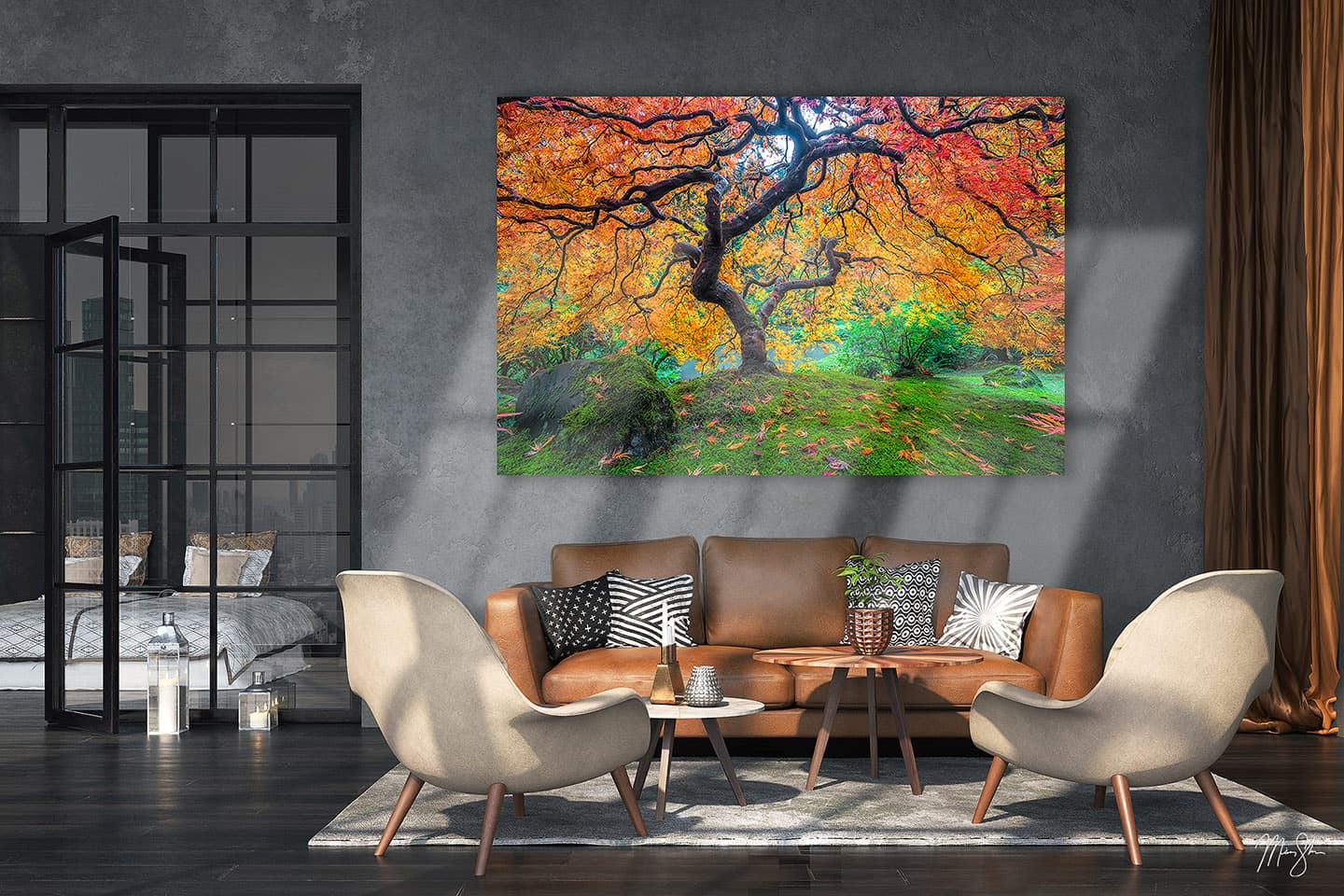
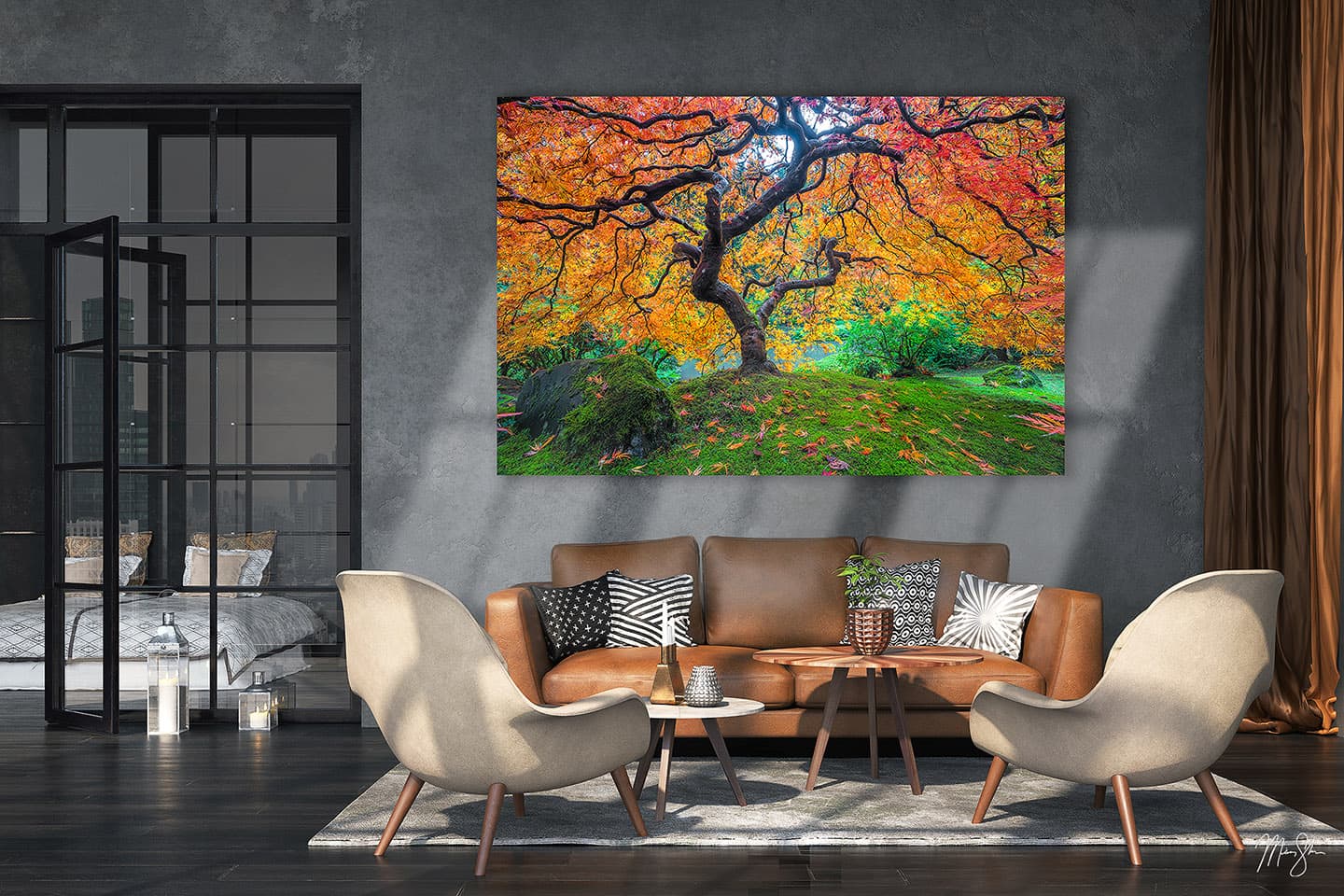
A comparison of two acrylic prints of Firebolt showing standard HD acrylic (first) and TruLife acrylc (second), showing off the anti-glare properties of TruLife acrylic prints.
Common Artwork Lighting Options
Most collectors use one of thes following simple lighting solutions. The right choice usually depends on the style of the room and the number of pieces you’re lighting. It is also worth considering how permanent you want the lighting installation to be.
Ceiling Track Lighting
Track lighting is one of the most flexible options for lighting artwork. Each light head can be adjusted individually. This makes it easy to aim light precisely where it’s needed. This is very ideal for galleries and long hallways. It is also super flexible and ideal to use with any wall that has multiple pieces of art. It also allows you to easily reposition lights if you were to ever rearrange your space.
Picture Lights
Picture lights are mounted directly above the artwork to provide a classic, gallery-style look. This is a very popular choice for single statement pieces or traditional interiors. Many modern picture lights use LED technology and can be dimmable. This gives you control over brightness without producing excessive heat.
Recessed Ceiling Lights
Recessed lights offer a clean and minimal appearance that works especially well in most contemporary spaces. When positioned correctly and aimed at about a 30-degree angle, they provide even, glare-free illumination while keeping the ceiling visually uncluttered.
When selecting fixtures, here are three things to look for:
- High CRI (90+)
- Adjustable beam angles
- Dimmable LED compatibility
Can LED lights damage artwork?
High-quality LED lights are safe for most artwork. They produce very little heat and no UV radiation, making them a better long-term option than halogen or incandescent bulbs.A Simple Rule to Follow
If you’re still struggling on where to start, this combination works well in most spaces and provide good lighting for your artwork investment:
- LED bulb: 3000K
- CRI: 90 or higher
- Beam angle: 30–40°
- Placement: 30-degree angle to the artwork
This is simple, effective and very close to the lighting used in many galleries.
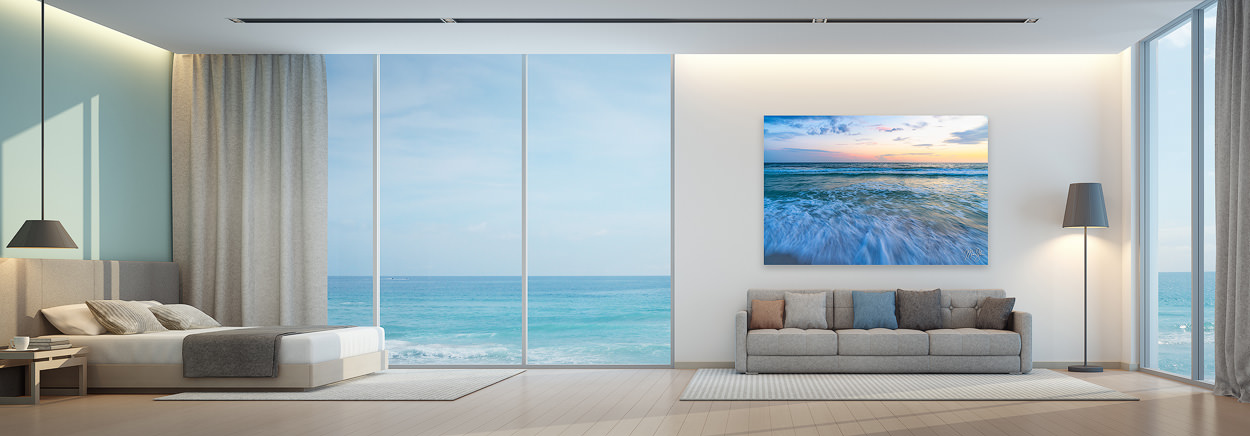
Destin Dreams lit by both ambient and accent lighting with unique cove lighting. It is an example of how creative you can get with interior design and lighting.
Final Thoughts
Great lighting doesn’t have to be complicated or even expensive. With the right bulb at the correct angle and a bit of attention to placement, your artwork will become one of the most striking elements in your home.
If you ever have questions about lighting a specific piece, feel free to reach out to me. I am always happy to help collectors get the most out of their artwork.

Ready to Add a Metal or Acrylic Print To Your Wall?
View my galleries to get started picking out your art. Choose from mountains, trees, beaches and so many more options!